






Real-Time Spectrum Analyzer for Drone Detection and Spectrum Monitoring | HAROGIC New SAN Series
04 / 10 2026
The HAROGIC SAN Series is a compact real-time spectrum analyzer built for drone detection, spectrum monitoring, RF measurement, and embedded applications. With frequency coverage up to 9 GHz, sweep speeds up to 1 THz/s, and analysis bandwidth up to 100 MHz, it delivers strong RF performance in a portable form factor. Supported by onboard FPGA processing, license-free SAStudio4 software, and broad API compatibility, the SAN Series offers a flexible and professional solution for modern signal analysis tasks.
1 What makes the new SAN series unique?
The new HAROGIC SAN series is designed for users who need a compact, high-performance real-time spectrum analyzer for drone detection, spectrum monitoring, RF testing, and embedded signal analysis. With frequency coverage from 9 kHz to 4.5/6/9 GHz, a rapid 1 THz/s sweep speed (RBW = 250 kHz), and upgradable analysis bandwidth up to 100 MHz, the SAN series combines portability with advanced RF performance.
For engineers, integrators, and spectrum monitoring professionals, the SAN series provides the sensitivity, spectral purity, and real-time processing capability required for today’s complex RF environments.
1.1 High-performance SHR architecture
The SAN series uses a dual-path architecture to optimize performance across the full frequency range. Direct sampling ensures high precision at low frequencies, while a high-performance two-stage SHR architecture handles higher bands. To maintain excellent signal integrity, the system integrates 14-stage preselection filtering, achieving typical image and IF rejection exceeding 95 dBc.
This architecture also provides a clean analog IF output, giving users additional flexibility for custom downstream analysis, advanced integration, and application-specific RF workflows.
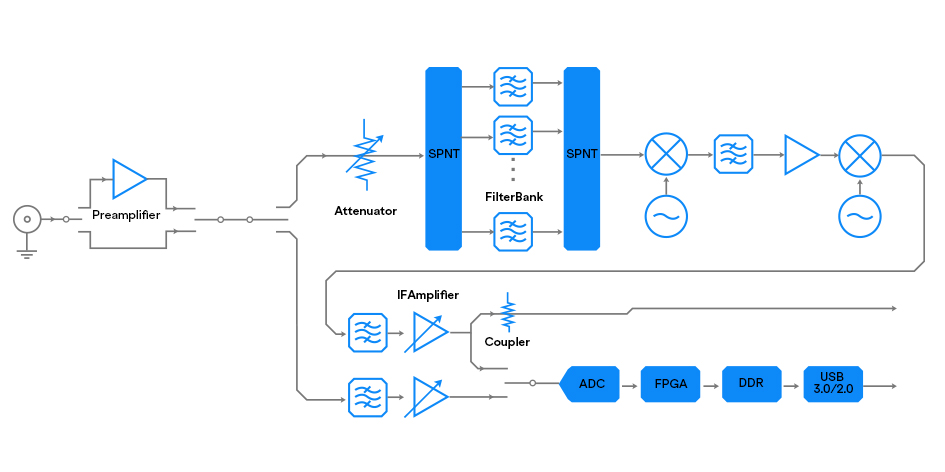
Figure 1. Schematic diagram of the SAN series
1.2 Onboard FPGA for real-time spectrum analysis
In Real-Time Spectrum Analysis (RTSA) mode, the SAN series achieves a 100% Probability of Intercept (POI) for signals as brief as 1 us. An onboard FPGA capable of performing 30,000 FFTs per second, together with a 1 THz/s sweep speed (RBW >= 250 kHz), enables reliable capture of transient, burst, and frequency-hopping signals.
Internal spurs are typically suppressed below -80 dBFS, helping create a cleaner signal environment for accurate RF observation. These capabilities make the SAN series especially suitable as a real-time spectrum analyzer for drone detection, interference hunting, and spectrum monitoring applications.
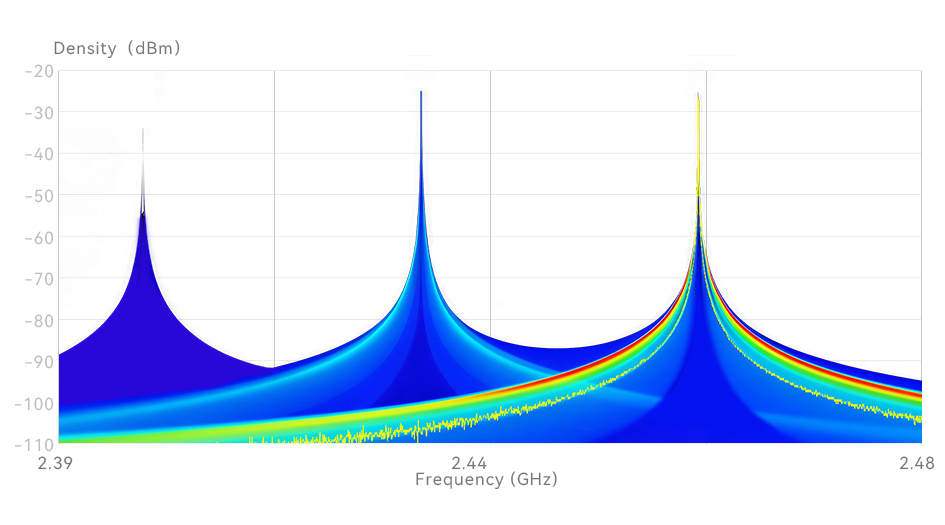
Figure 2. RTSA mode in SAStudio4 software
1.3 Powerful ecosystem, flexible secondary development
For portable measurement systems and embedded RF deployments, the SAN series offers a robust API with native support for C/C++, C#, Python, MATLAB, LabVIEW, and GNU Radio. This compatibility enables straightforward integration into automated test environments (ATE), software-defined systems, and large-scale spectrum monitoring platforms.
The SAN series also balances strong RF performance with a compact footprint. The standard enclosure weighs only 420 g, while a streamlined 195 g core module is available for OEM and system integration. Whether used for UAV-mounted spectrum monitoring, tactical SIGINT, or field signal recording, the SAN series delivers laboratory-grade precision in a compact SWaP-optimized design.
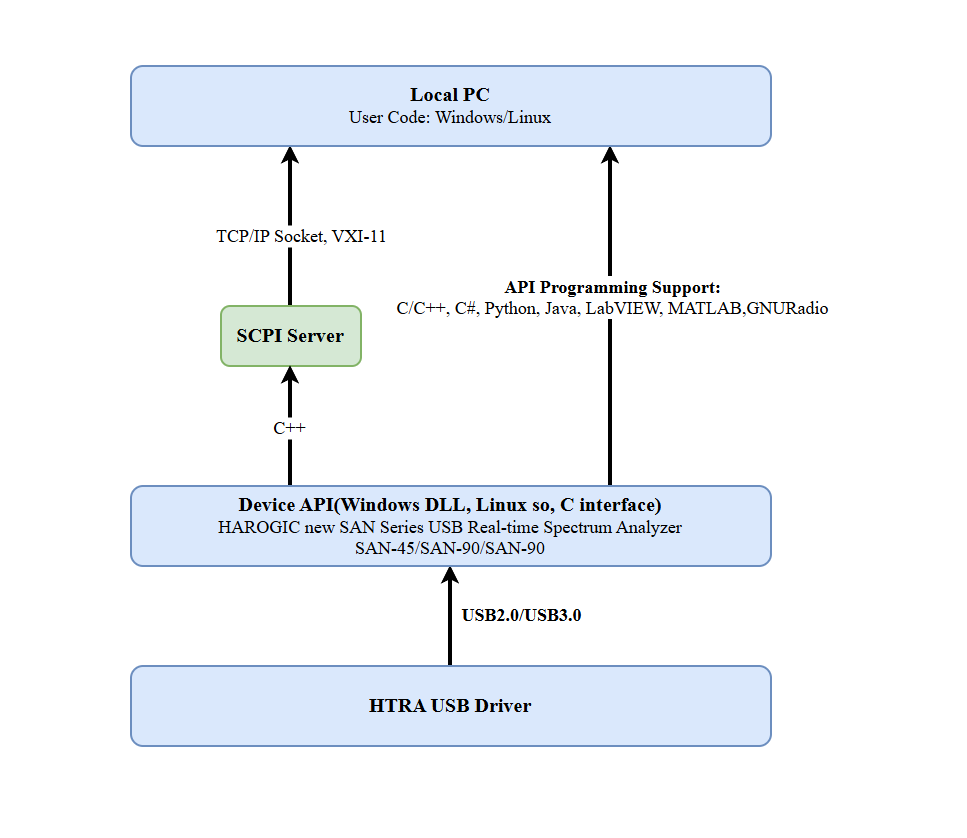
Figure 3. Working flow for the SAN series
2 All-inclusive software package
Every SAN series analyzer includes SAStudio4, a comprehensive software package for deep signal analysis. The platform features eight operating modes, including Real-Time Spectrum Analysis (RTSA), IQ Streaming, and Automated Phase Noise Measurement. With native support for Channel Power, Occupied Bandwidth (OBW), and AM/FM demodulation, SAStudio4 gives users a professional-grade software environment immediately after deployment.
Most importantly, these essential tools are license-free, allowing users to unlock full hardware capability from day one without recurring costs.
Key Software Features
Standard Spectrum Analysis Mode
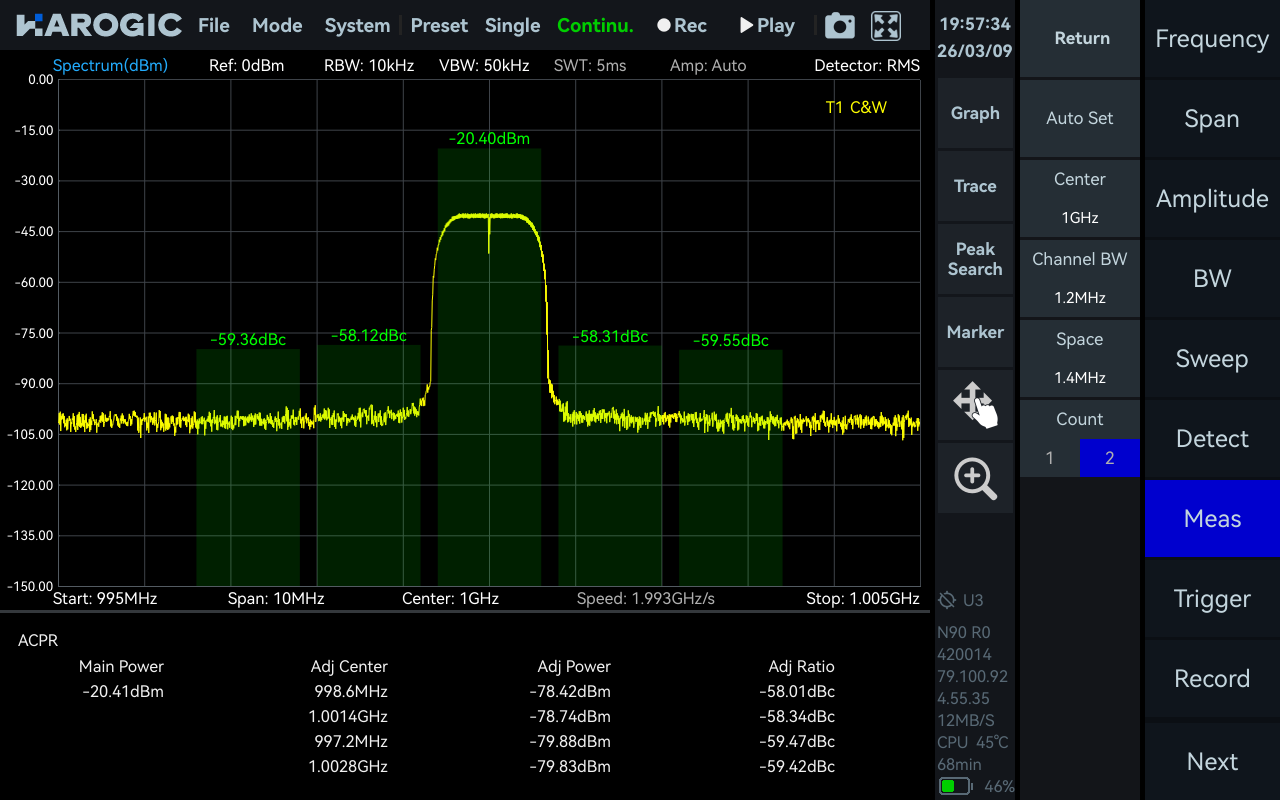
This mode provides a wide range of RF measurement functions, including full-span sweep, Channel Power, OBW, ACPR, IM3, and SEM. It also supports spectrum recording and playback. Combined with tools such as signal tracking, peak table, and amplitude correction, it serves as a complete platform for routine RF testing and signal analysis.
IQ Streaming Mode
This mode supports up to 100 MHz analysis bandwidth and enables IQ data capture through multiple trigger methods. It provides IQ time-domain waveform displays, spectrum and spectrogram views, AM/FM demodulation, and digital down conversion (DDC), supporting advanced signal development and software-defined radio workflows.
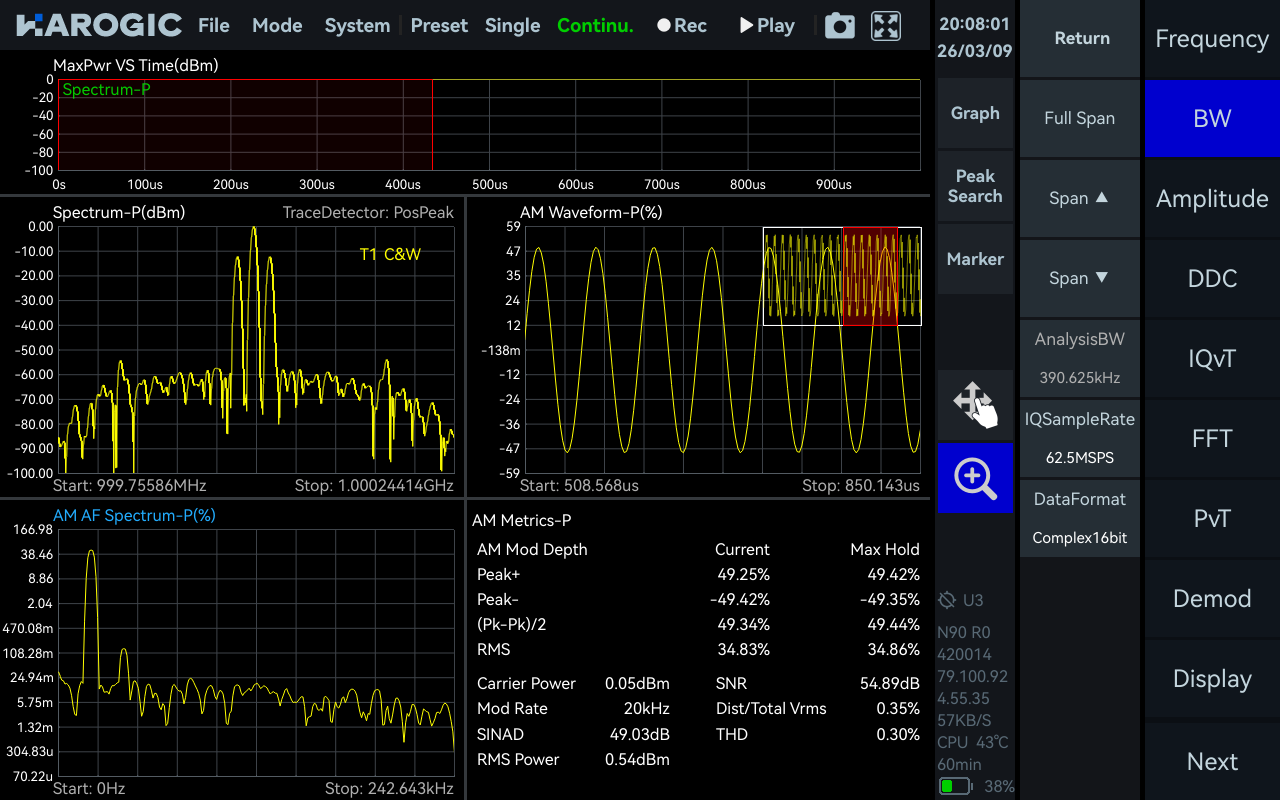
Real-Time Spectrum Analysis Mode
Powered by a high-speed FPGA-based FFT engine, this mode delivers strictly gapless and overlap-free FFT processing. This makes it ideal for true real-time monitoring across the full bandwidth, especially in dynamic RF environments.
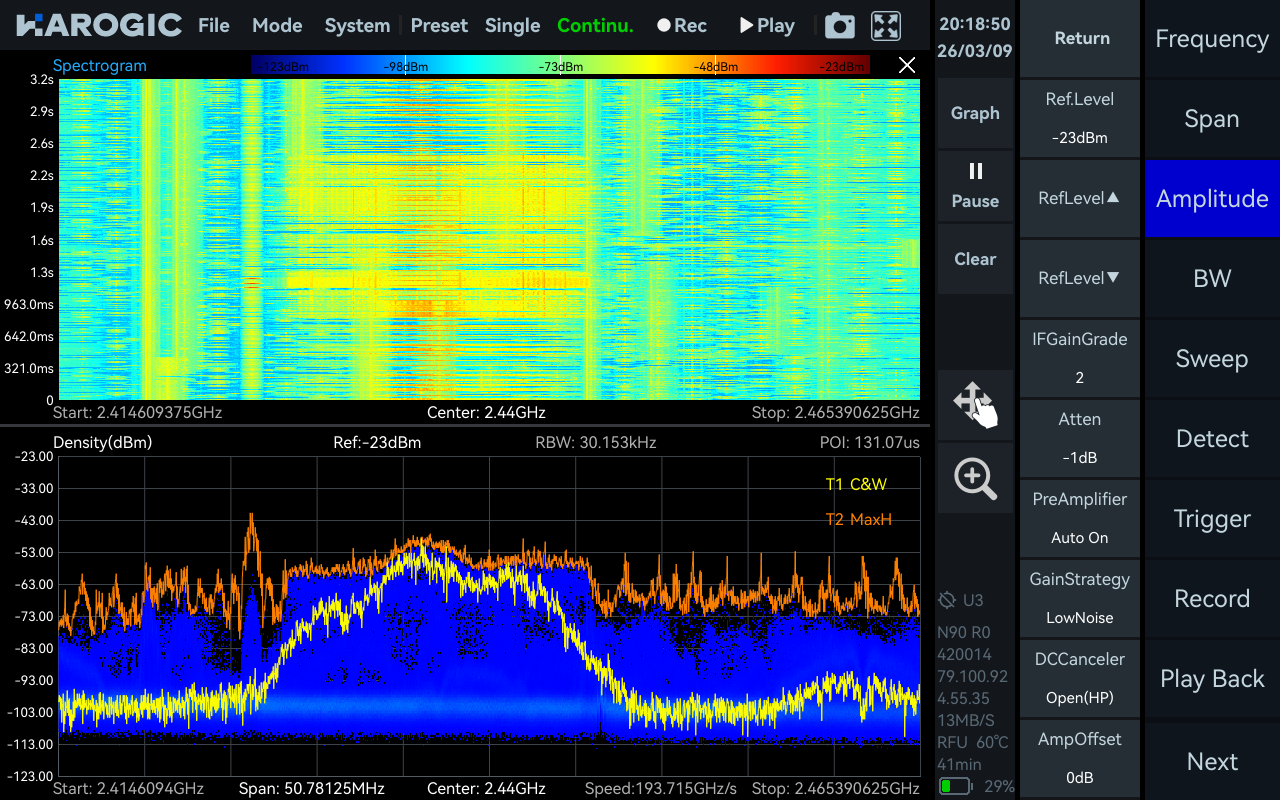
Basic Vector Modulation Analysis Mode (opt.71)
This mode supports comprehensive demodulation of a wide range of digital modulation formats, including 2ASK, 2FSK, 4FSK, GMSK, BPSK, QPSK, 8PSK, 16QAM, 32QAM, 64QAM, 128QAM, and 256QAM signals. It provides precise measurement of EVM, amplitude error, phase error, frequency error, and SNR. For 64QAM signals at a 2 Msps symbol rate, the system achieves an EVM as low as 0.6%.
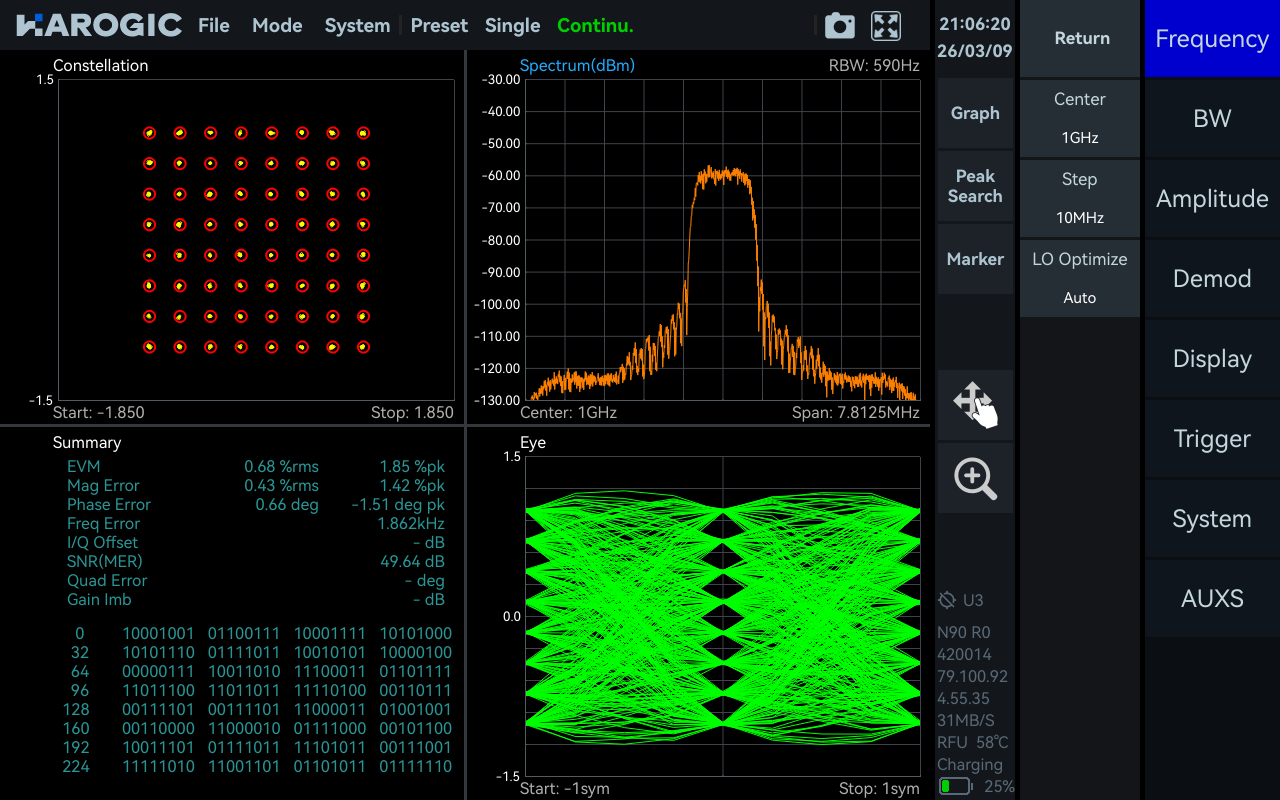
Harmonic Analysis Mode
This mode supports detection and measurement of up to 10 harmonic components, including harmonic peaks, harmonic channel power, and total harmonic distortion.
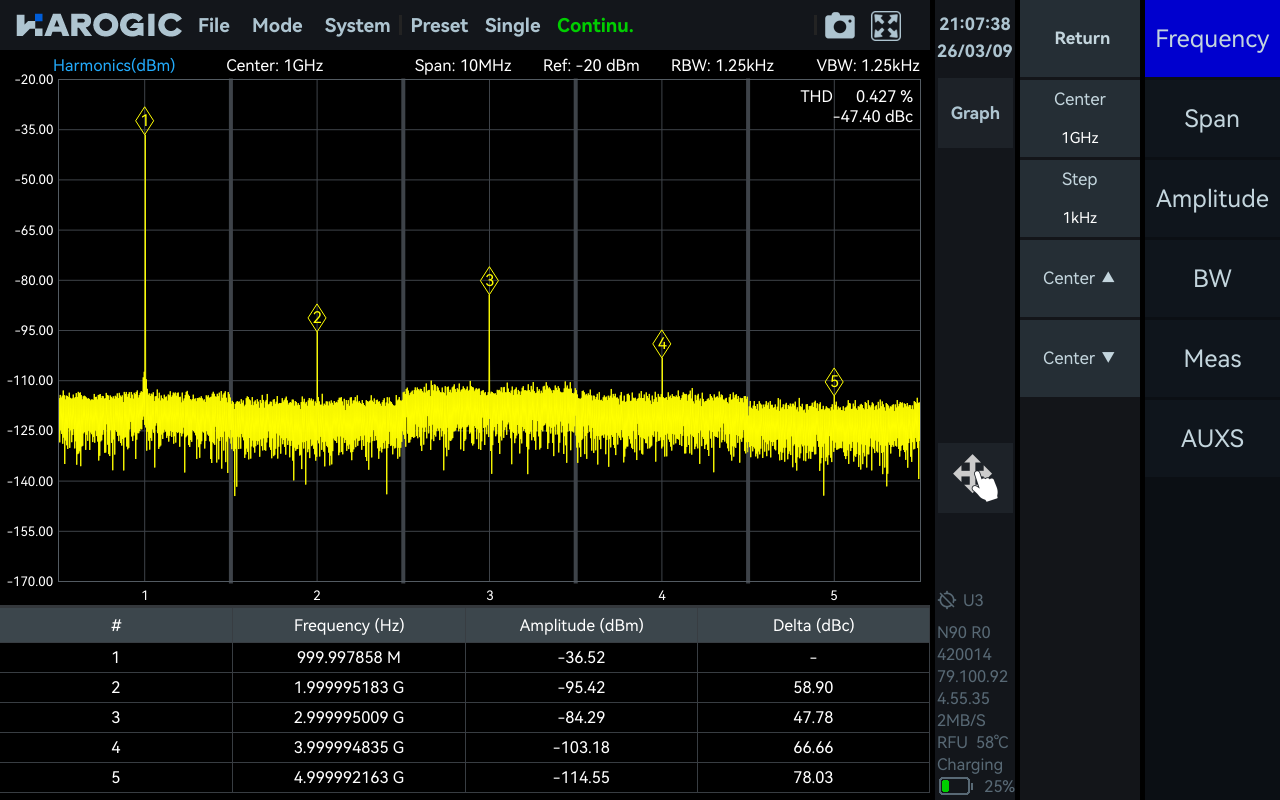
Phase Noise Measurement Mode
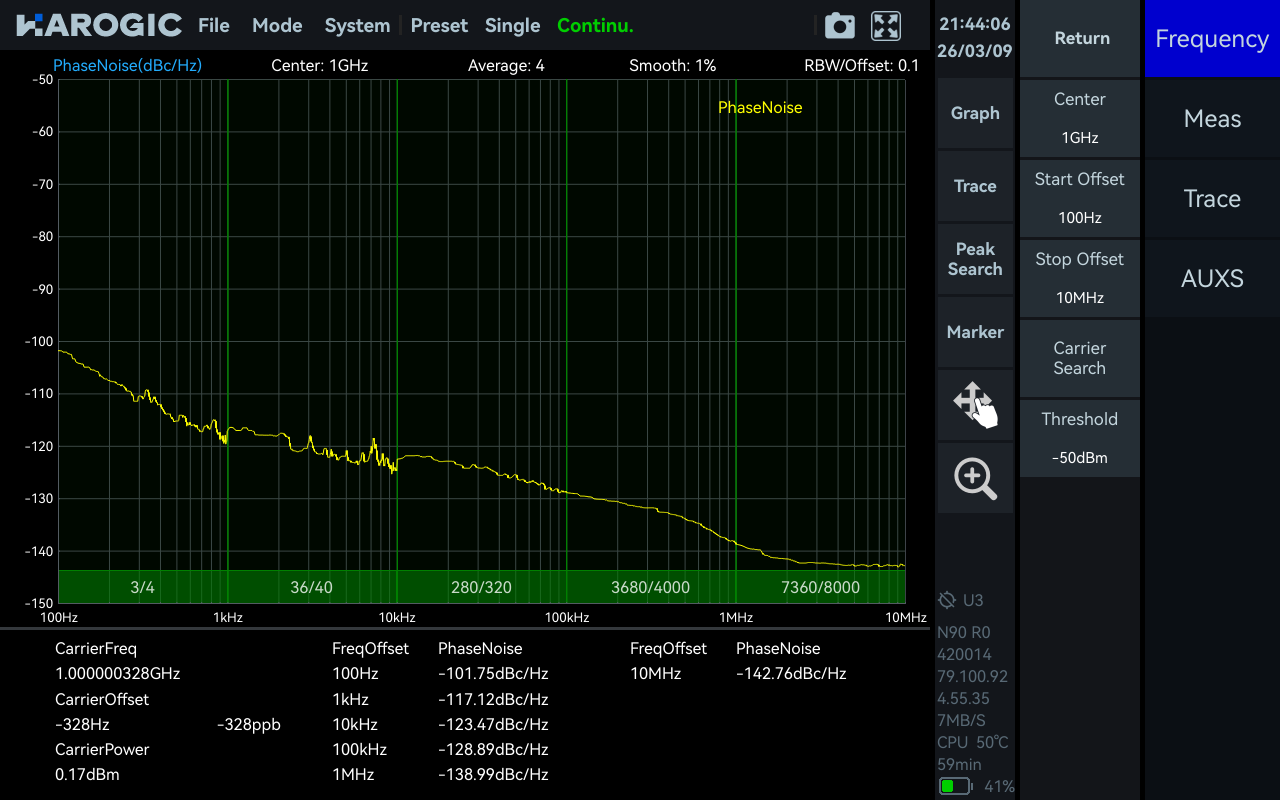
This mode enables precise evaluation of carrier phase stability across a wide offset frequency range from 1 Hz to 10 MHz. With the built-in automatic carrier search function, the software can instantly lock onto the target carrier without manual adjustment.
Pulse Analysis (opt.72)
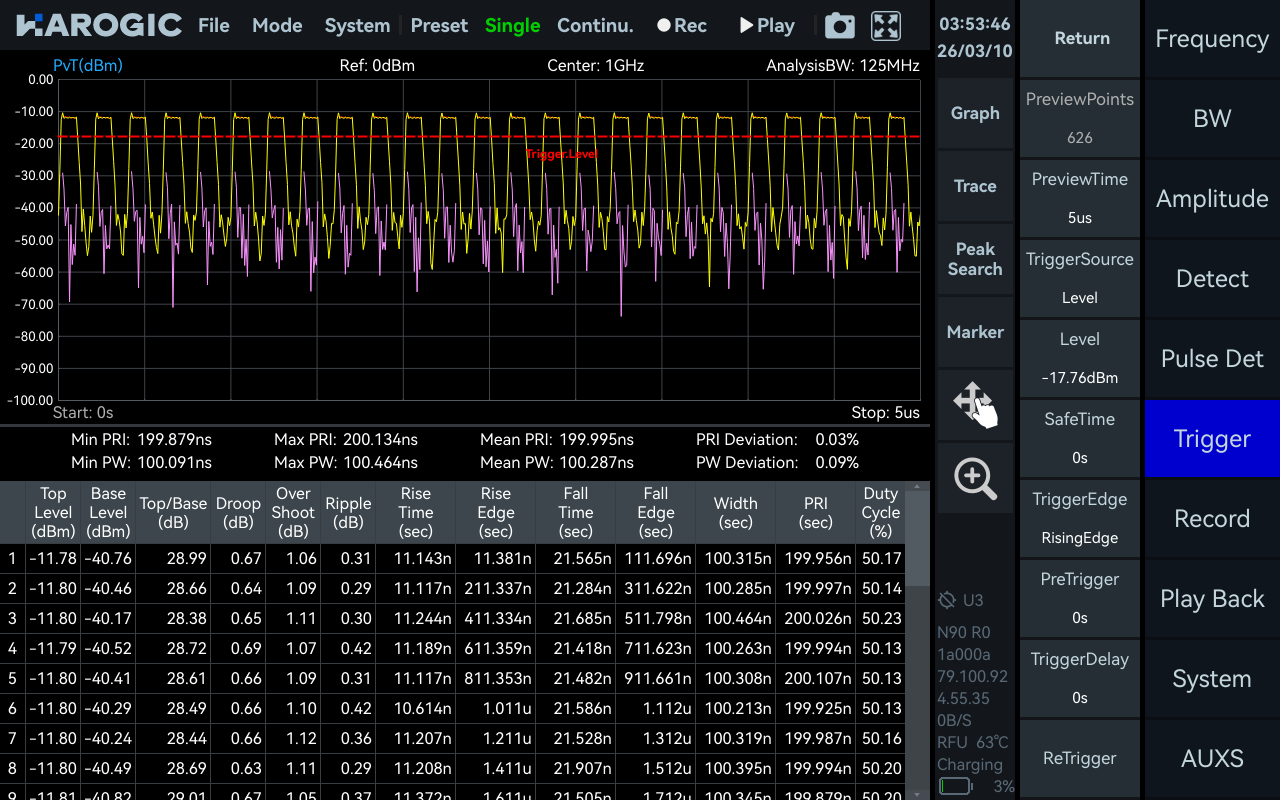
This mode supports the measurement of pulse signals with pulse widths of 32 ns or greater. It provides key results including peak level, reference level, peak-to-reference ratio, droop, overshoot, ripple, rise/fall time, rise/fall edge, pulse width, period, and duty cycle.
Mapping Mode
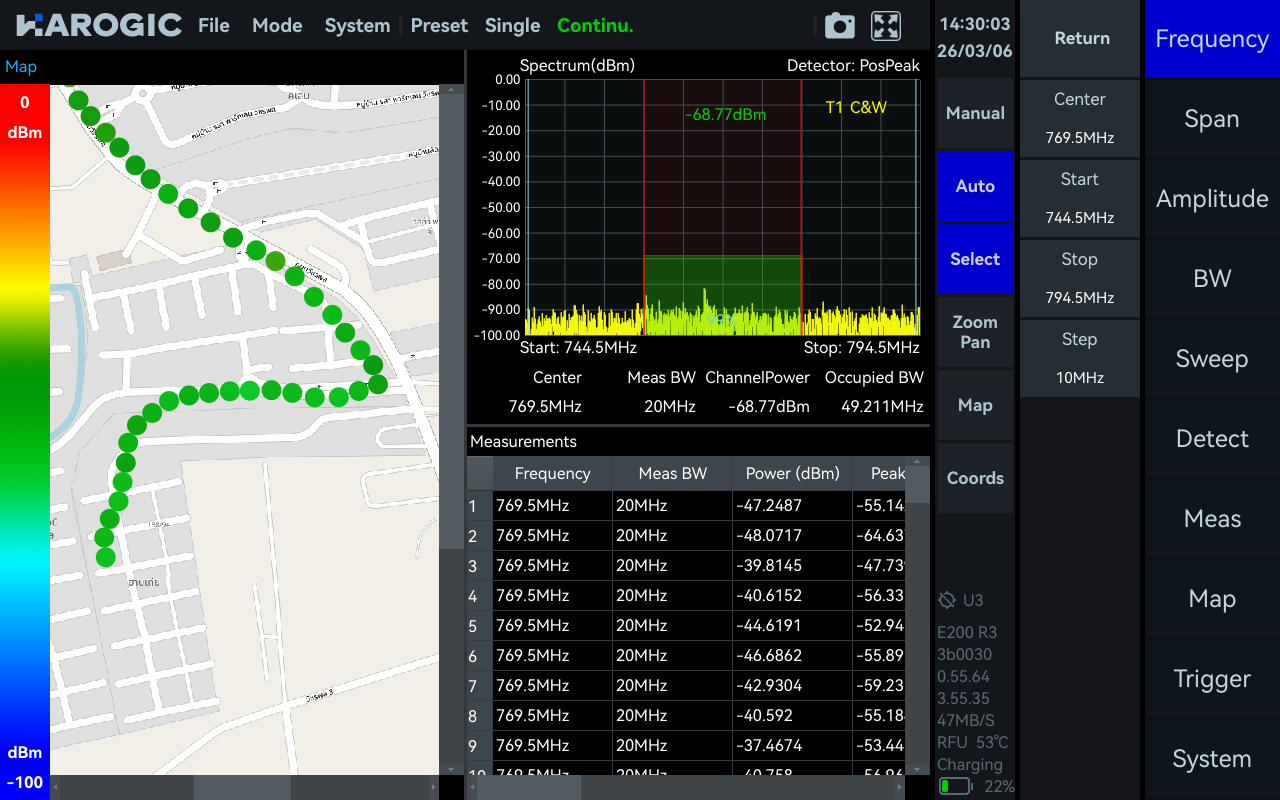
This mode integrates GNSS positioning functionality, enabling heat maps and other graphical visualizations in map view. It displays Channel Power, Occupied Bandwidth, coordinates, altitude, pixel position, and azimuth, making it highly useful for spectrum monitoring, radio monitoring, and interference localization.
SEM Spectral Emission Mask
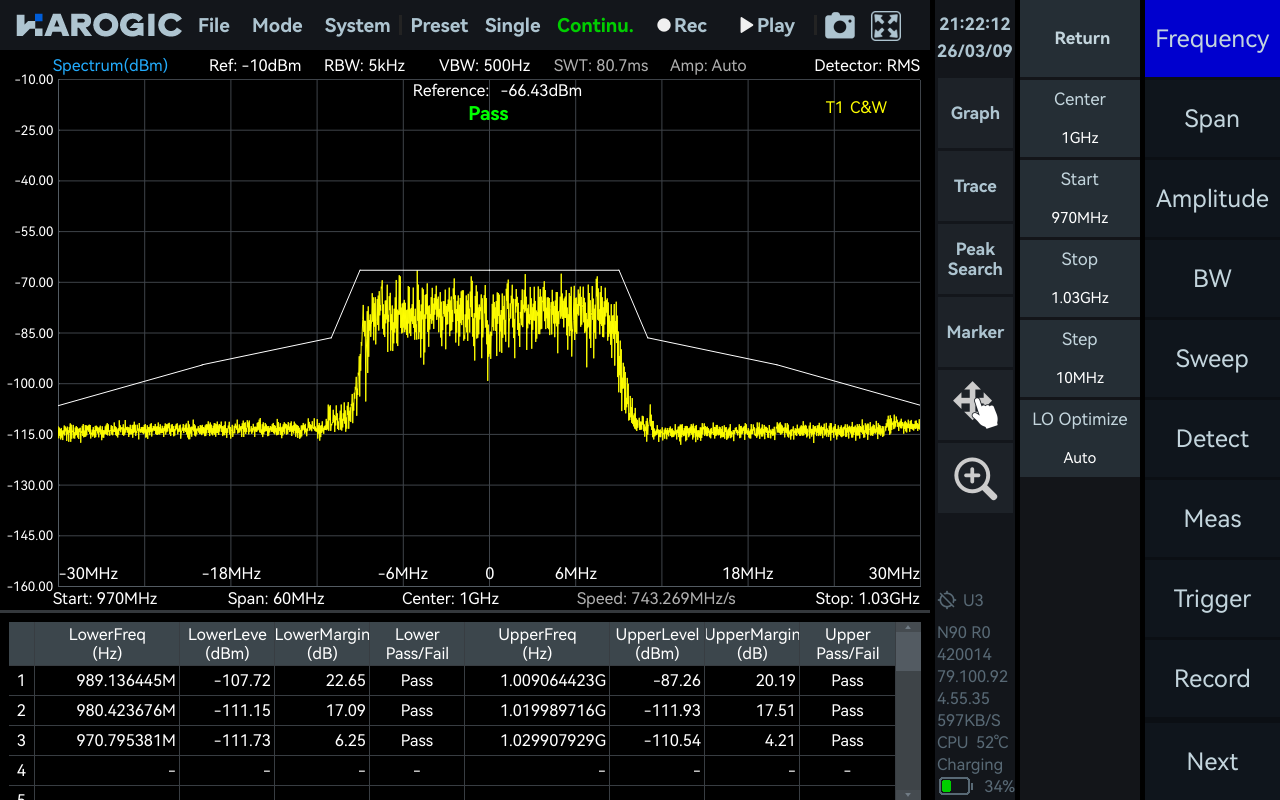
This function supports customizable frequency offsets and limit thresholds and includes predefined mask templates compliant with major communication standards such as Bluetooth, 802.11a/g, and 802.11b. During testing, the software captures and calculates the power and margin of each offset band in real time and clearly indicates Pass/Fail results.
MSCAN Memory Scan
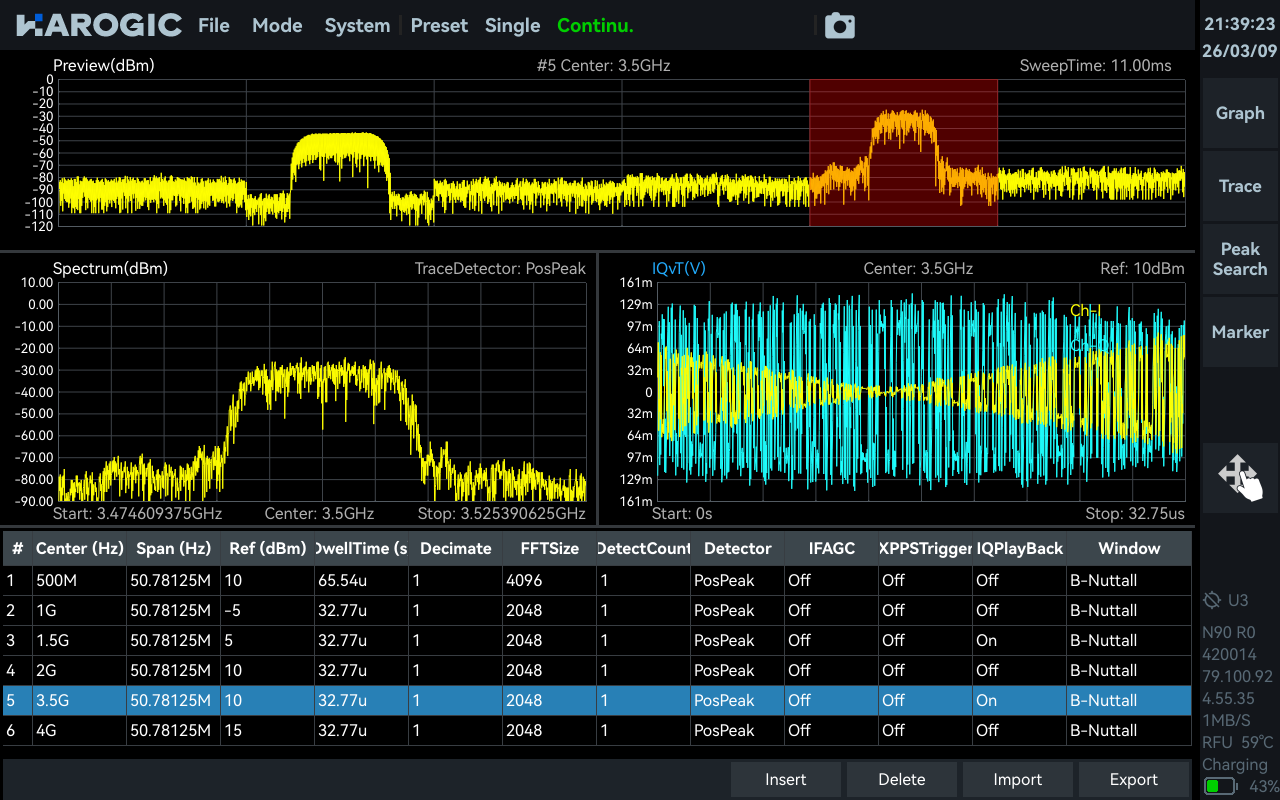
In this mode, the SAN series scans each pre-configured segment sequentially and outputs corresponding measurement results. Parameters for each scan segment can be independently configured, including reference level, decimation factor, FFT size, and IF AGC. This helps users monitor the spectrum while simultaneously acquiring IQ data, improving overall measurement efficiency.
3 Typical application overview
3.1 Test and Measurement
The SAN series delivers an ultra-low noise floor, with a Displayed Average Noise Level (DANL) of -168 dBm/Hz at 1 GHz. It also offers excellent phase noise performance at < -110 dBc/Hz (1 GHz at 10 kHz offset). Combined with internal spurious levels typically suppressed below -80 dBFS, the SAN series provides a strong foundation for detecting low-level signals and performing high-dynamic-range RF measurements.
The platform includes advanced measurement functions such as Channel Power, OBW, ACPR, IM3, and Spectral Emission Mask (SEM) as standard license-free capabilities. Memory Scan (MSCAN) and Map modes further improve field usability, while optional digital demodulation and automated pulse measurement expand the system from a high-performance spectrum analyzer into a versatile signal analyzer.
3.2 Embedded RF system
With compact size and ultra-low power consumption, HAROGIC USB spectrum analyzers are well suited for embedded integration. Whether used in in-vehicle monitoring systems, smart terminals, or space-constrained airborne RF platforms, the new SAN series can be integrated efficiently.
Native support for C/C++, C#, Python, Java, MATLAB, LabVIEW, and GNU Radio, together with SCPI compatibility, enables smooth integration into automated test systems and shortens development cycles. The platform also supports multiple operating systems and architectures, allowing developers to optimize performance across different deployment environments.
3.3 Spectrum management and monitoring
For spectrum management and monitoring, the SAN series combines strong RF performance with portability, helping users move efficiently from wide-area spectrum surveys to precise signal characterization. With frequency coverage up to 9 GHz and a sweep speed of 1 THz/s (RBW = 250 kHz), the instrument can complete ultra-wideband surveys within milliseconds for fast interference detection and response.
A 100 MHz real-time analysis bandwidth supports seamless monitoring of wideband frequency-hopping and multiple simultaneous signals. Excellent phase noise performance helps detect weak signals even in the presence of strong adjacent signals. With 100% POI for pulses as short as 1 us, the SAN series is a practical real-time spectrum analyzer for spectrum monitoring in dense and fast-changing RF environments.
3.4 Software-defined radios
The SAN series combines the accuracy of professional RF instrumentation with the flexibility of SDR. Unlike conventional SDR platforms, it maintains ±1.5 dB amplitude accuracy across the full frequency range and temperature conditions, providing clean and reliable I/Q data for software-based processing.
HAROGIC also provides the gr-htra OOT module, optimized for this device, allowing users to work directly in GNU Radio Companion (GRC) without low-level driver development. Native SoapySDR support further improves compatibility across software ecosystems. This makes the SAN series a strong option for users who need both instrument-grade measurement and SDR flexibility.
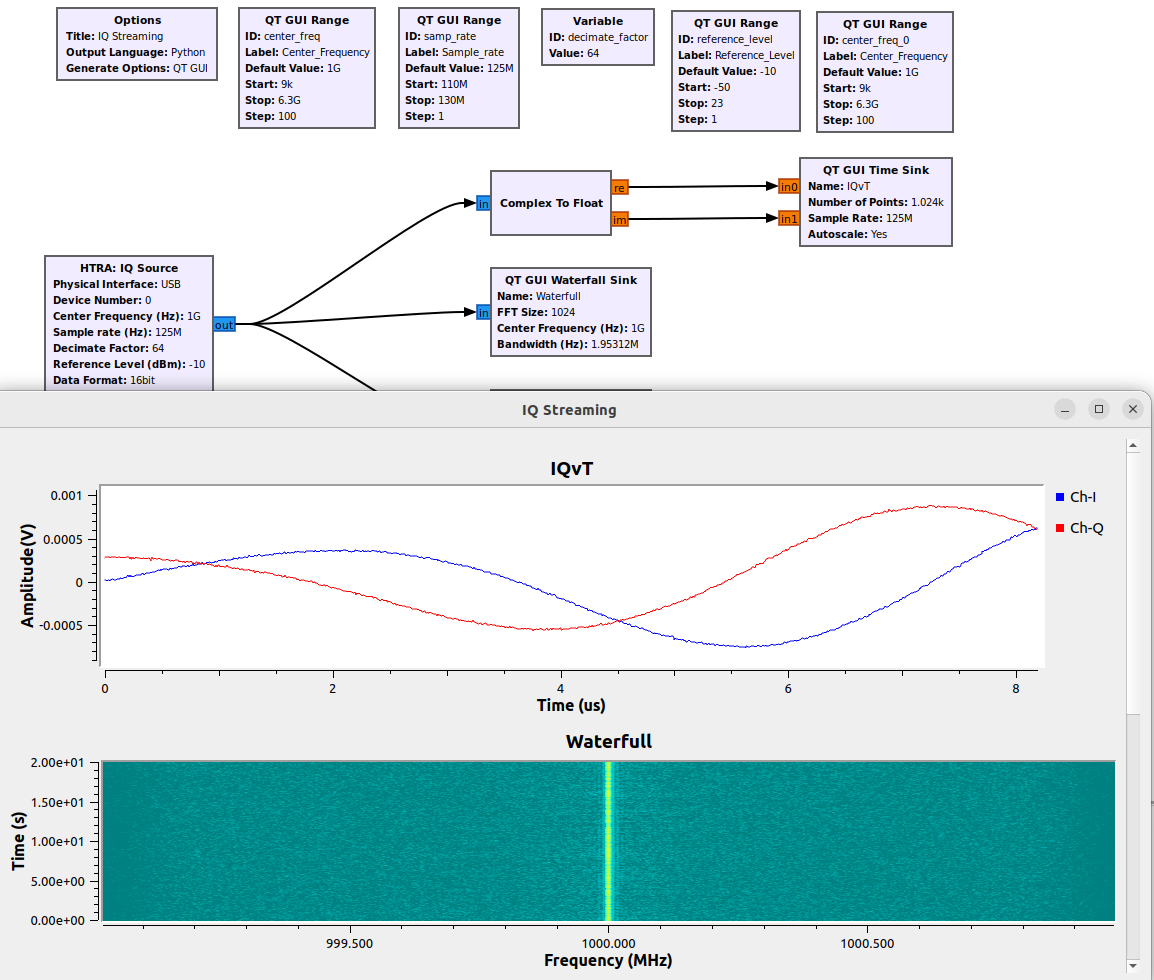
Figure 4. SAN operating on the GNU Radio platform
3.5 Drone detection system
Drone detection requires high sensitivity, fast sweep capability, and wide instantaneous bandwidth. In Counter-UAS (C-UAS) applications, the SAN series provides a typical DANL of -168 dBm/Hz at 1 GHz, enabling detection of weak signals below -130 dBm and supporting identification of drones at ranges exceeding 5 km.
With up to 100 MHz analysis bandwidth, the SAN series can capture wideband signals from platforms such as DJI O3 (40 MHz) and O4 (60 MHz) in a single acquisition. Its fast sweep capability also supports persistent monitoring across 1.2 GHz, 2.4 GHz, and 5.8 GHz frequency-hopping bands, improving early threat detection. For organizations looking for a compact real-time spectrum analyzer for drone detection, the SAN series provides a practical balance of portability, performance, and software flexibility.
4 Selection Guide
4.1 HAROGIC SA series selection guide
| Feature | New SAN series | SAE-200 | SAN-400 |
|---|---|---|---|
| Frequency Range | 9 kHz – 9.5 GHz | 9 kHz – 20 GHz | 9 kHz – 40 GHz |
| Architecture | Superheterodyne 14 Preselector Filters |
Superheterodyne 19 Preselector Filters |
Superheterodyne 14 Preselector Filters |
| Sweep Speed RBW = 250 kHz |
1.0 THz/s | 1.0 THz/s | 1.0 THz/s |
| Analysis Bandwidth | 100 MHz | 100 MHz | 100 MHz |
| Phase Noise 1 GHz, 10 kHz offset |
-110 dBc/Hz | -100.0 dBc/Hz | -107.5 dBc/Hz |
| DANL, 1 GHz | -168 dBm/Hz | -166 dBm/Hz | -160 dBm/Hz |
| Dimensions | 163 × 66 × 37 mm | 139 × 68 × 31 mm | 139 × 68 × 31 mm |
| Power Consumption | 15 W | 10–14 W | 10–14 W |
| GNSS Module | Built-in | External | External |
| Warranty | 3 Years | 3 Years | 3 Years |
| Built-in FPGA | Standard | Standard | Standard |
4.2 HAROGIC new SAN series vs Signal Hound BB60C/D
| Model | SAN-45 | SAN-60 | BB60C | BB60D | SAN-90 |
|---|---|---|---|---|---|
| Frequency | 9 kHz-4.5 GHz | 9 kHz-6 GHz | 9 kHz-6 GHz | 9 kHz-6 GHz | 9 kHz-9 GHz |
| Start Price | $1,298.00 | $1,998.00 | $3,895.00 | $4,835.00 | $2,998.00 |
| Architecture | SHR | SHR | SHR | SHR | SHR |
| DANL 1GHz (dBm/Hz) | -168 | -168 | -151 | -158 | -168 |
| Phase Noise @1G, 10k (dBc/Hz) | -110 | -110 | -83 | -93 | -110 |
| Preselectors | 14 | 14 | N/A | N/A | 14 |
| Analysis BW | 50 MHz (Std.) 100 MHz (Opt.) |
50 MHz (Std.) 100 MHz (Opt.) |
27MHz | 27MHz | 50 MHz (Std.) 100 MHz (Opt.) |
| Sweep Speed | 1000 GHz/s | 1000 GHz/s | 24GHz/s | 24GHz/s | 1000 GHz/s |
| Image/IF Rejection | < -90 dBc | < -90 dBc | N/A | N/A | < -90 dBc |
| FPGA processing | Onboard DSP | Onboard DSP | PC does the FFTs | PC does the FFTs | Onboard DSP |
| Timebase Accuracy | 0.5 ppm (Built-in GNSS) | 0.5 ppm (Built-in GNSS) | 1.0 ppm | 1.0 ppm | 0.5 ppm (Built-in GNSS) |
| Size(mm) | 163x66x37 | 163x66x37 | 219X81X30 | 219X81X30 | 163x66x37 |
| Weight | 420g | 420g | 500g | 500g | 420g |
| Power Consumption | 15W | 15W | ~5W | ~5W | 15W |